Small Molecule, Big Impact: The Science Behind Hydrogen Water.
Molecular hydrogen may be one of the most researched wellness compounds you've never heard of. Backed by thousands of studies, molecular hydrogen (H2 ) has become known for its ability to support cellular health, recovery, energy, and overall well-being.* Yet despite the growing research, most people still don't know what it is—or how such a simple substance can be a powerful tool for your health.
Let’s break down the science behind how it works.

Key Takeaways:
- As the smallest and lightest molecule in existence, hydrogen effortlessly enters your cells to support health from within.
- Hydrogen in water (H2O) is not the same as the hydrogen in hydrogen-infused water (H2O + H2 ).
- Hydrogen works in the body by selectively targeting only the most harmful free radicals, reducing oxidative stress while preserving beneficial cellular signaling.
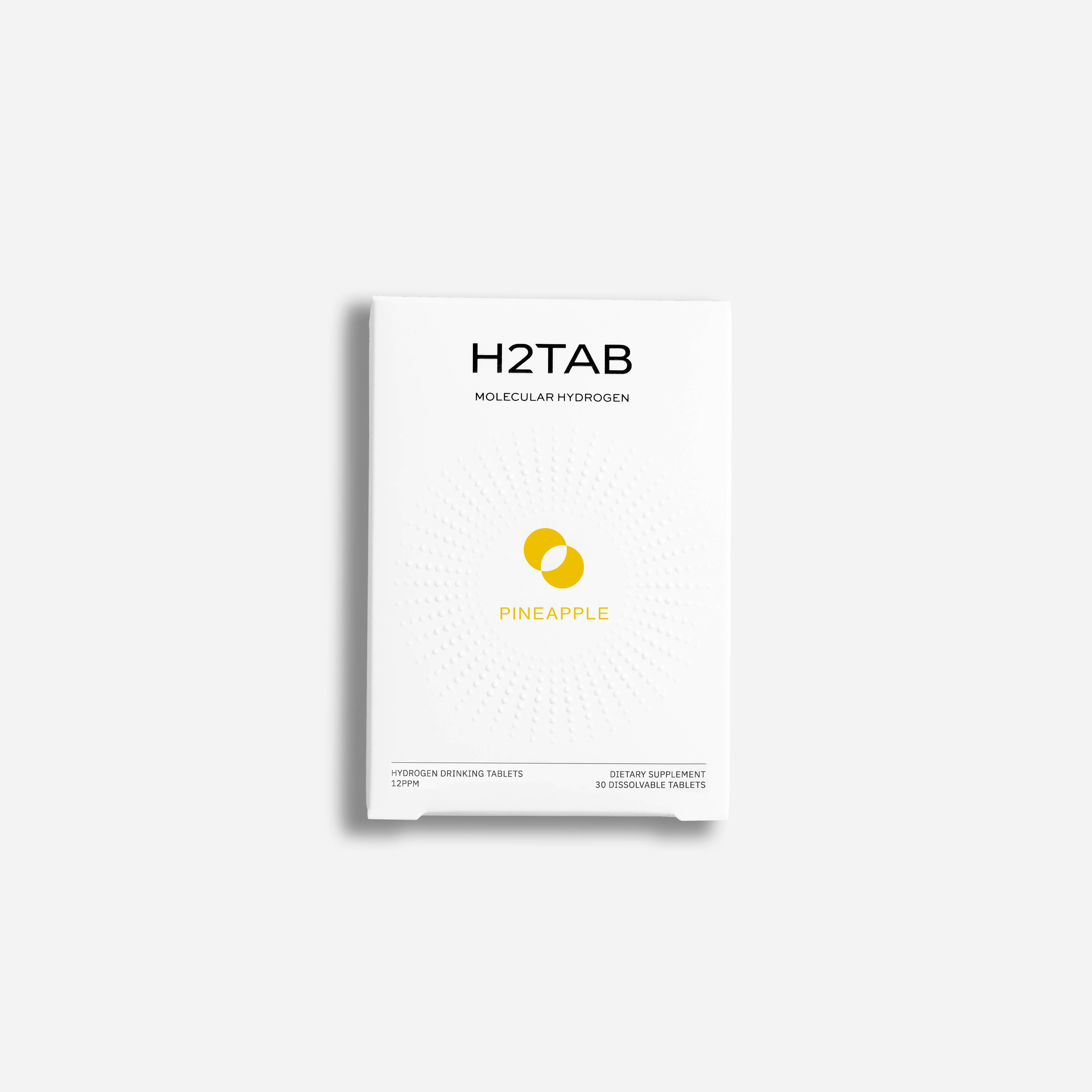
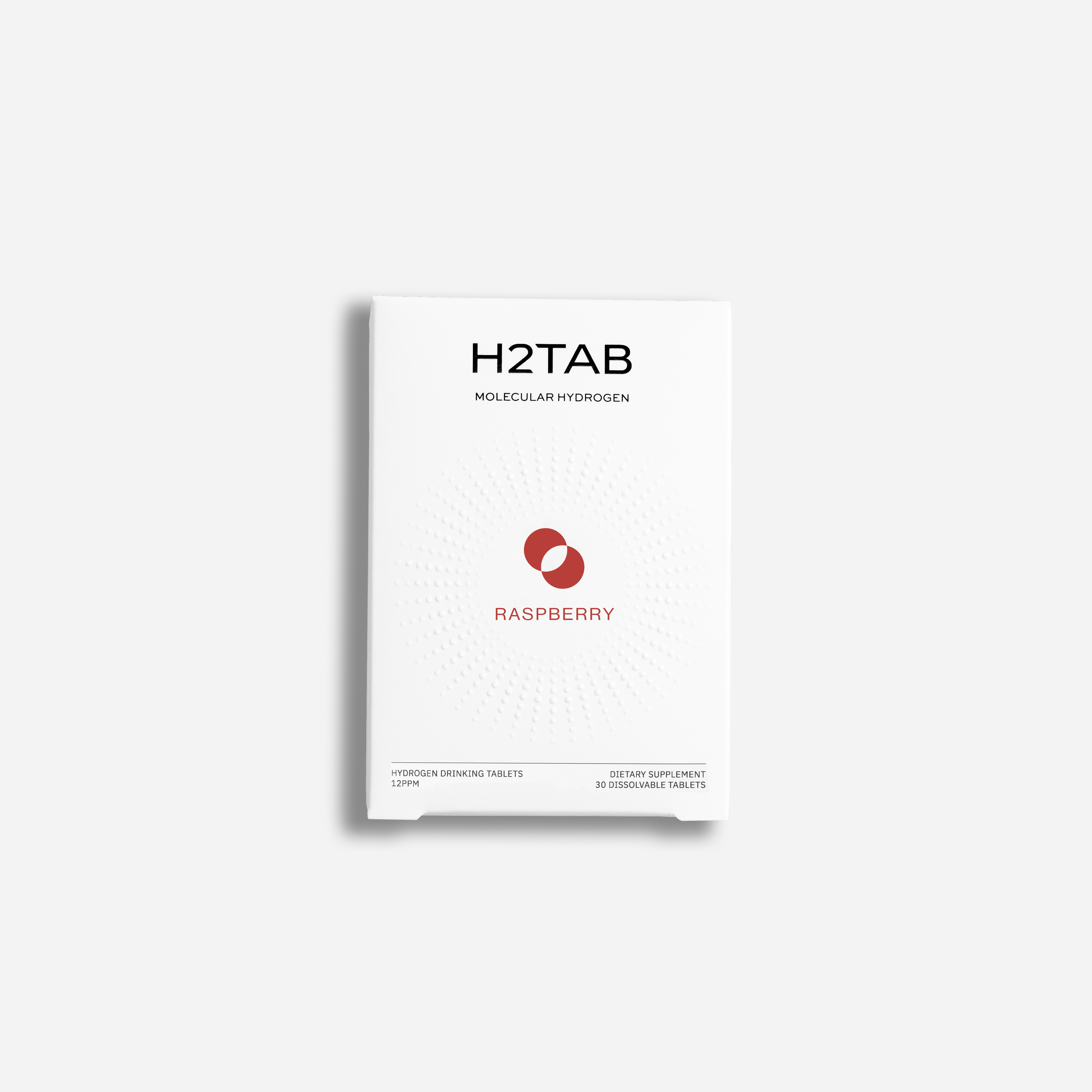
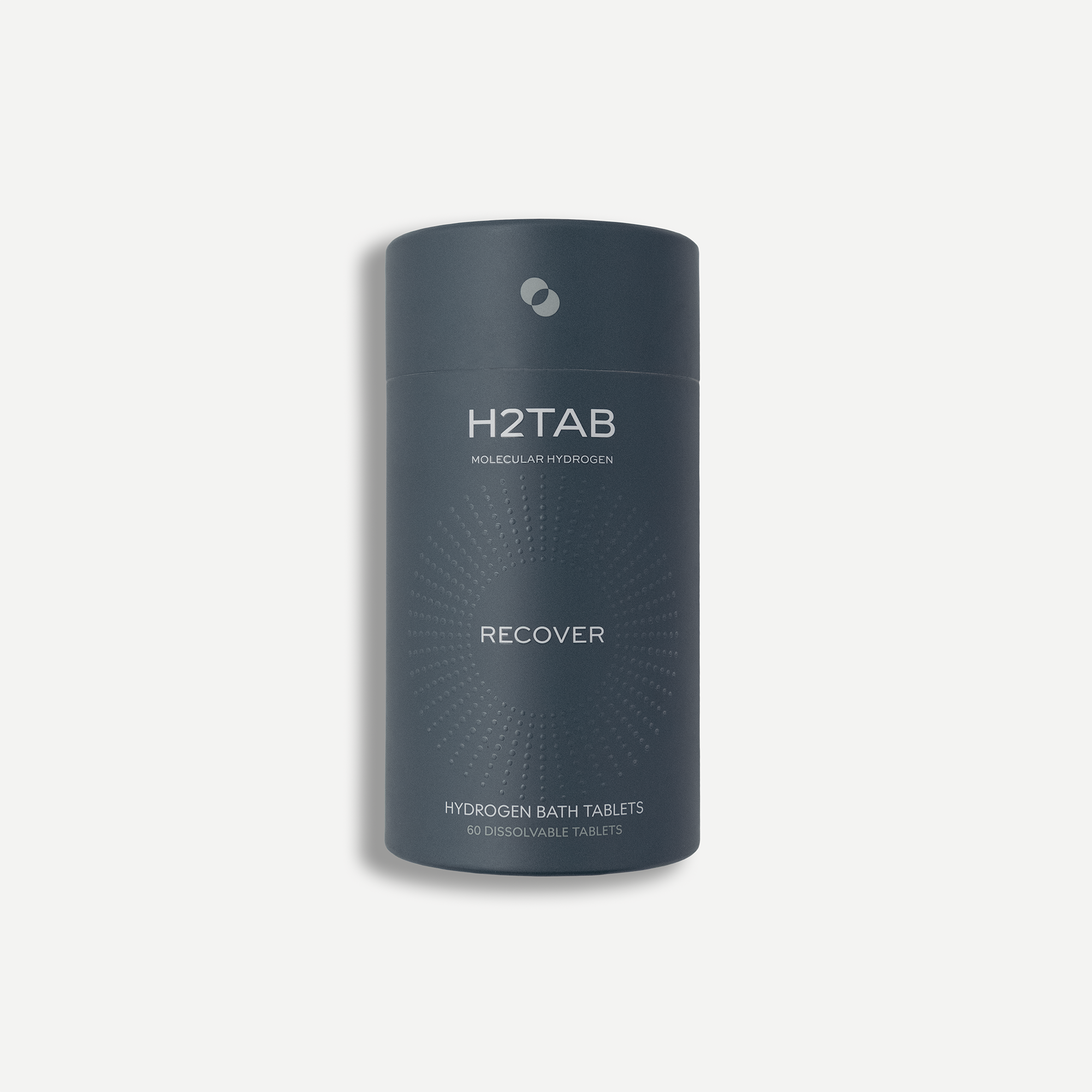
- H2Tab makes molecular hydrogen simple by generating billions of pure hydrogen nanobubbles to deliver up to ~12 ppm of dissolved gas in a convenient drink or bath tablet format.
What is Molecular Hydrogen?
Hydrogen is the oldest, simplest, and most abundant element in the universe. Historically, our ancestors had regular access to it through hydrogen-rich natural springs and high-fiber diets—which modern gastroenterologists now know fueled the natural production of hydrogen right inside our gut.
Our lives today look a bit different. Between ultra-processed foods, bottled and treated water, and low-fiber diets, we’ve largely been cut off from this foundational element. At the same time, our modern environment places a much greater burden on our bodies, with daily stressors like environmental toxins, poor sleep, and nonstop screen time forcing our cells to work overtime. This relentless baseline stress leaves us running on empty, creating a kind of “biological rust” that slows down every single process in the body.
Our cells are facing more daily damage than ever before, with fewer natural defenses to fight back.
Hydrogen water has been clinically studied for its ability to help close this gap. By delivering a highly concentrated dose of molecular hydrogen straight to your cells, H2Tab Drinking Tablets help restore the natural resilience and foundational support nature always intended you to have.*
H2O vs. Hydrogen Water: What’s the Difference?
A common point of confusion is thinking that regular water already has plenty of hydrogen. Let’s look at the simple chemistry:
Regular Water: H2O
Hydrogen-Infused Water: H2 O + H2
In a standard water molecule, the hydrogen atoms are chemically bound to the oxygen atom. They are locked down, chemically stable, and completely stationary. Your body can’t separate them to access the hydrogen independently.
Molecular hydrogen, represented by the chemical formula H2 , is entirely different. 10 It consists of two hydrogen atoms paired exclusively with each other, floating freely as a gas. 4
When you drop one of our Drinking Tablets into a glass of water, it triggers a reaction that releases billions of tiny hydrogen nanobubbles. This gas doesn't structurally alter or change the water itself. Instead, it sits freely between the water molecules—unbound, unbothered, and instantly bioavailable. From the moment you drink it, it can reach deep into your cells. 4,10
Why Size Matters: Bypassing the Cellular Traffic Jam.
Molecular hydrogen is incredibly unique. It is the smallest and lightest molecule—with a weight that’s one-ninth that of water. It’s also electrically neutral, meaning it carries no electrical charge and can dissolve in fats and water alike.* Because it has no barriers, it possesses an “all-access pass” to the human body, allowing it to reach places where other compounds simply can’t. 4
To put this in perspective, think of the walls of your cells as a fine-mesh screen. Traditional antioxidants, like vitamin C, vitamin E, and CoQ10, are large, bulky molecular structures—up to 431x heavier than hydrogen. They face significant “traffic jams” when trying to pass through your cell membranes, often requiring special transport channels to open up and let them in one by one. 10
Because H2 is so tiny, it avoids this traffic altogether. It slips effortlessly through the mesh screen, reaching the deepest parts of your cells instantly and helping support your overall health at ground zero.* 4,10
By entering your cells and supporting your biology from “ground zero,” molecular hydrogen helps optimize the very foundations that keep your body running smoothly.*
How H2 Works in the Body.
Once inside the cellular environment, H2 works on three foundational levels:
Acts as a Selective Antioxidant.
Around the clock, your cells are defending themselves against molecular damage. This damage is driven by free radicals—highly unstable, unpaired molecules missing an electron. While your body naturally produces them during metabolism, their production is significantly accelerated by environmental factors such as pollution, UV rays, and poor sleep. To stabilize themselves, these radicals violently steal electrons from your healthy cells, damaging everything from your cell membranes to your DNA. When they accumulate faster than your body can clear them, they cause oxidative stress: a form of internal biological rust that disrupts healthy cellular function. 11 This underlying damage can be the driving force behind premature aging, low daily energy, slow physical recovery, and general wear-and-tear.
This is where hydrogen comes in. While traditional antioxidants indiscriminately wipe out these free radicals, hydrogen acts with total precision. It ignores the helpful free radicals your body uses for immune signaling and selectively neutralizes only the most cell-damaging variants 4,10 — effectively mitigating oxidative stress and supporting whole-body function at the cellular level.*
Introduces Hormetic Stress.
Many supplements claim to do the heavy lifting for you, which can inadvertently make your systems lazy over time. Molecular hydrogen works differently, introducing a helpful, microscopic stress (called hormetic stress) that actually trains your cells to grow stronger and defend themselves. This allows your body to grow a self-sustaining, long-lasting shield against daily wear and tear—benefits that compound long after you drink your glass of hydrogen water.*
Encourages Cellular Signaling.
Our bodies are like massive communication networks, and when things get out of sync, you can experience symptoms such as a sluggish metabolism, brain fog, and fatigue. Hydrogen acts as a master signal modulator, helping your cells communicate more clearly to restore balance.* By tuning into your body’s internal radio stations, molecular hydrogen helps:
-
Influence repair pathways, which are responsible for cellular maintenance and longevity. 5
-
Optimizes metabolic regulation, allowing your cells to process energy more efficiently. 5
-
Support a natural inflammation response, helping your body dial it back to a healthy baseline level. 5
A Full-Body Cellular Upgrade.
Every single system in your body—your energy, metabolism, sleep, skin health, and brain function—starts at the cellular level. Because molecular hydrogen acts directly at this foundational level, its benefits can ripple through virtually every system in the body.* After all, you are only as healthy as your cells.
Rather than targeting a single symptom, molecular hydrogen works by supporting core cellular processes that influence your overall well-being. As a result, it has been studied for 40+ health benefits, including:
✓ Energy & Focus 2,3,7
✓ Brain Function & Mental Clarity 2,3
✓ Restful Sleep & Reduced Fatigue 5,7
✓ Gut Health & Intestinal Barrier Support 5
✓ Skin & Tissue Health 1,6,12
✓ Balanced Immune & Stress Response 5
✓ Healthy Aging & Cellular Function 11,13
These benefits aren’t just temporary fixes—with consistent use, they continue to compound over time.*
The Bottom Line.
Molecular hydrogen works right where your health begins: inside your cells. By upgrading your glass of water (or bath) with the universe’s original element, you aren't just taking another supplement—you're unlocking a clean, precise, and multifaceted defense system at the most foundational level.* Consistently using hydrogen-rich water gives your body a simple, powerful tool to maintain true internal balance against the relentless stressors of modern life.*
*These statements have not been evaluated by the Food and Drug Administration. This product is not intended to diagnose, treat, cure, or prevent any disease.
References
- Bajgai, J., Lee, K. J., Rahman, M. H., Fadriquela, A., & Kim, C. S. (2021). Role of molecular hydrogen in skin diseases and its impact in beauty. Current Pharmaceutical Design, 27(5), 737-746.
- Choi, J. W., Kim, H. Y., & et al. (2018). Hydrogen-rich water improves cognitive function and reduces oxidative stress in a rat model of cerebral ischemia-reperfusion injury. Brain Research, 1687, 1–11.
- Feng, Y., Wang, R., & et al. (2013). Hydrogen-rich saline reduces oxidative stress and neuronal apoptosis in traumatic brain injury via activation of the Nrf2 pathway. Neuroscience Letters, 549, 111–116.
- Halliwell, B., & Gutteridge, J. M. C. (2015). Free radicals in biology and medicine (5th ed.). Oxford University Press.
- Ichihara, M., Sobue, S., Ito, M., Ito, M., Hirayama, M., & Ohno, K. (2015). Beneficial biological effects and the underlying mechanisms of molecular hydrogen—Comprehensive review of 321 original articles. Medical Gas Research, 5(1), Article 12.
- Kato, S., Saitoh, Y., Iwai, K., & Miwa, N. (2012). Hydrogen-rich electrolyzed warm water represses wrinkle formation against UVA ray together with type-I collagen production and oxidative-stress diminishment in fibroblasts and cell-injury prevention in keratinocytes. Journal of Photochemistry and Photobiology B: Biology, 106, 24-33.
- LeBaron, T. W., Laher, I., Kura, B., Slezak, J., & Santilli, F. (2019). Hydrogen gas: From clinical medicine to an emerging ergogenic molecule for sports athletes. Canadian Journal of Physiology and Pharmacology, 97(9), 797–807.
- Murphy, M. P. (2009). How mitochondria produce reactive oxygen species. Biochemical Journal, 417(1), 1–13.
- Nathan, C., & Cunningham-Bussel, A. (2013). Beyond oxidative stress: An immunologist’s guide to reactive oxygen species. Nature Reviews Immunology, 13(5), 349–361.
- Ohta, S. (2007). Hydrogen acts as a therapeutic antioxidant by selectively reducing cytotoxic oxygen radicals. Nature Medicine, 13(6), 688–694.
- Sies, H. (2017). Oxidative stress: A concept in redox biology and medicine. Redox Biology, 11, 613–619.
- Tanaka, Y., & Miwa, N. (2022). Repetitive bathing and skin poultice with hydrogen-rich water improve wrinkles and blotches together with modulation of skin oiliness and moisture. Hydrogen, 3(2), 161-178.
- Valko, M., Leibfritz, D., Moncol, J., Cronin, M. T. D., Mazur, M., & Telser, J. (2007). Free radicals and antioxidants in normal physiological functions and human disease. The International Journal of Biochemistry & Cell Biology, 39(1), 44–84.